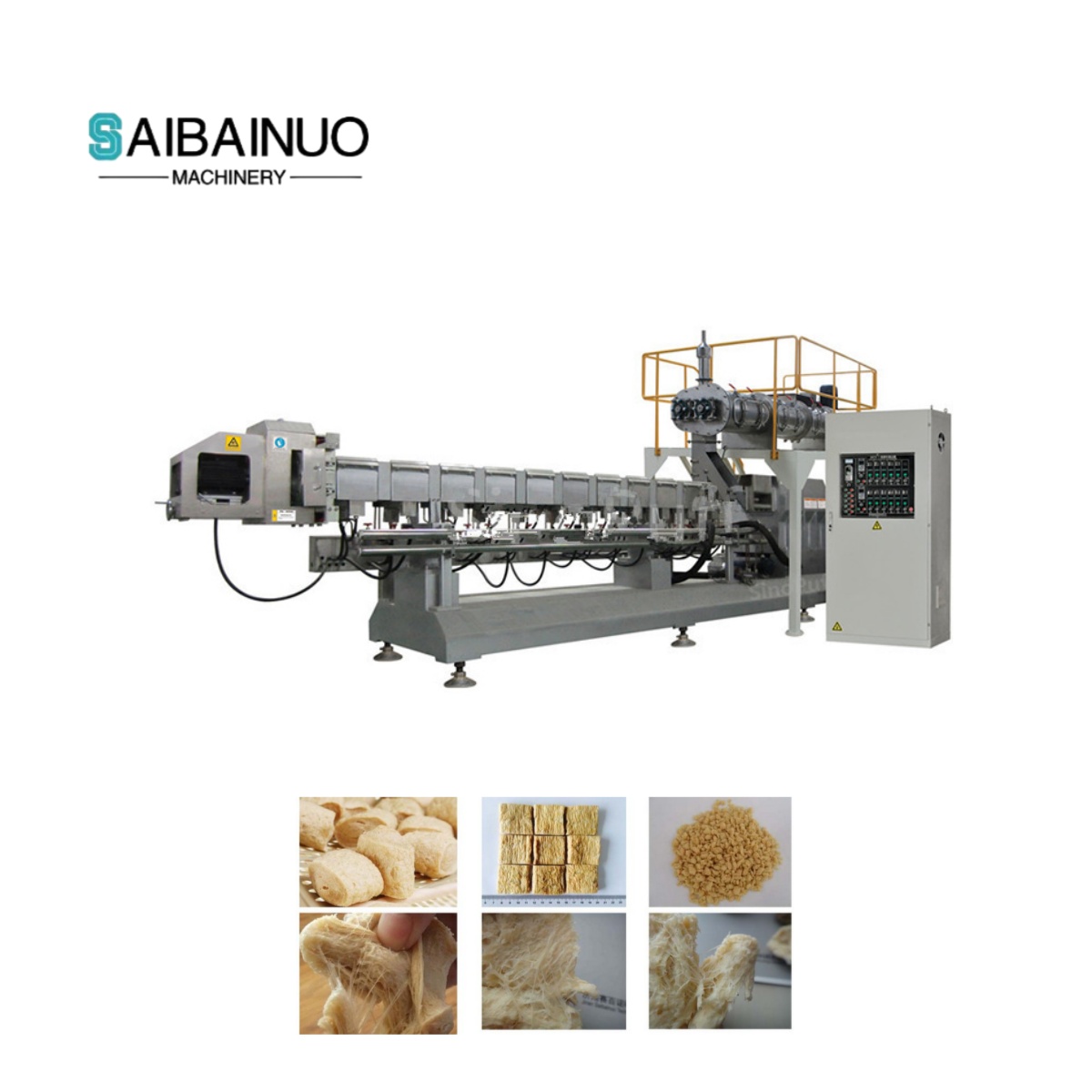
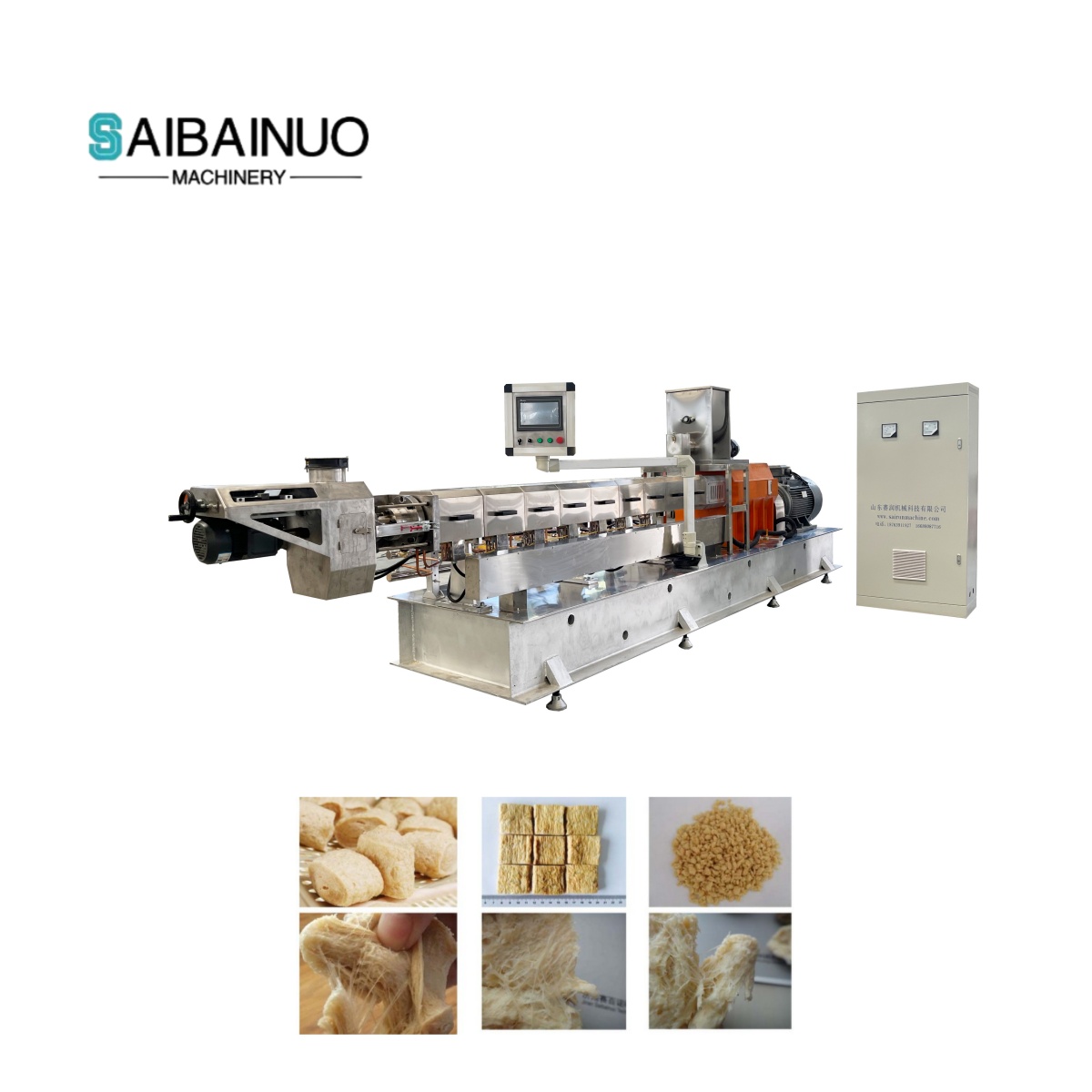
Textured Vegetable Protein Processing Line
Textured Vegetable Protein Processing Line uses the newest production equipment which is researched and developed according to the market demand and country's basic condition. This processing line uses the soybean and the peanut as the raw material and makes the round protein moisture become the chain shape and reorganization then form the sheet fibre structure by grinding, mixing, conditioning, high temperature, high pressure and high cutting.
Product Details
Textured Vegetable Protein Processing Line Video:
Main raw material: Defatted soy Meal, Soy protein,Wheat gluten
Product: Textured Soya Protein(TSP), Textured Vegetable Protein(TVP)
Capacity:260kg/hour, 600kg/hour and 1000kg/hour
Machine material: SUS304
Electric parts brand: SIEMENS
Textured Vegetable Protein Processing Line Description:
Textured Vegetable Protein Processing Line uses low temperature soy bean meal as main raw material to produce all kinds of textured protein food with high nutrition. As the textured soya protein is tasted like meat so it is welcomed by vegetarians. The textured soya protein machine is popular for many countries especially for developed countries who have more requirement for body health.
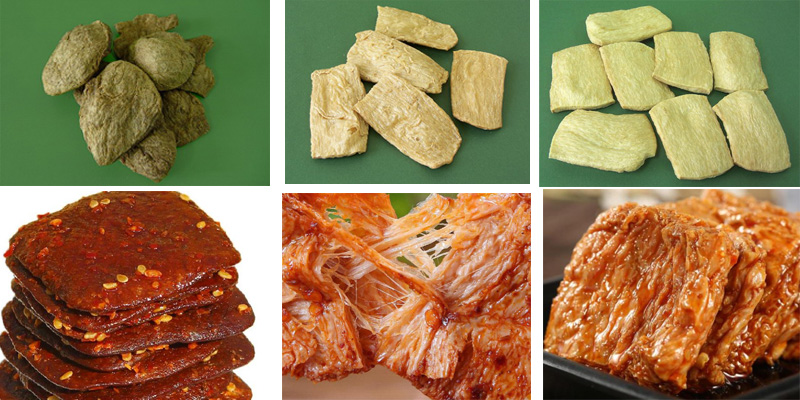
Textured Soya Protein Sample:
Here are some samples of products produced by textured soya protein machine.
Textured Vegetable Protein Processing Line Parameter:
The parameter of Textured Vegetable Protein Processing Line.
Model | Install Power | Real Power | Capacity | Dimension |
SLG65-IV | 110KW | 77KW | 250kg/h | 20x 2.0 x 3.0 |
SLG65-V | 135KW | 95KW | 300kg/h | 25x 2.0 x 3.0 |
SLG85 | 210KW | 147KW | 600kg/h | 32x 2.0 x 4.0 |
SLG95 | 300KW | 200KW | 1200kg/h | 40x 2.0 x 5.0 |
Product Features:
The textured soya protein machine has some advantages:
*Low product cost and high profit.
*The textured soya protein can be made into various shapes such as ball, pipe and so on.
*The durable screws are made by alloy steel and special craft.
*Visible auto-temperature controlling system with precise temperature viewing.
*High automation machine with easy operation.
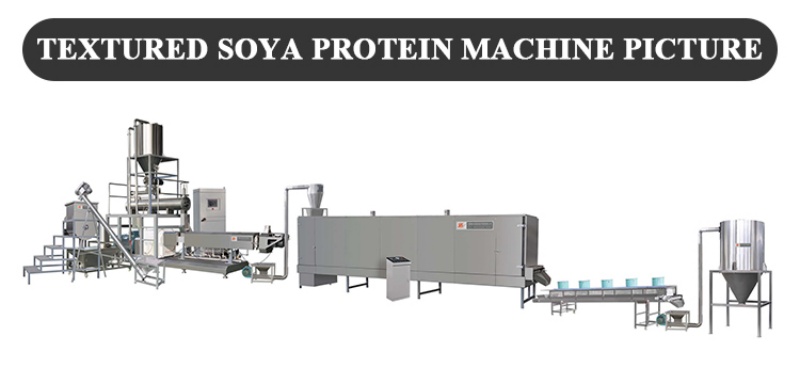
Machine process:
1. Mixing Raw Material
Soy flour or soy protein concentrate is mixed with water and other additives (such as flavors, colors, or nutrients) in a mixing chamber. The mixture is blended uniformly to form a dough-like consistency, ensuring optimal moisture content for extrusion.
2. Extruding and Shaping
The moist mixture is fed into a twin-screw extruder, where it undergoes high temperature and pressure. The extrusion process cooks the soy protein, denaturing its structure to create a fibrous, meat-like texture. The extruder’s die head shapes the product into strips, granules, or chunks, depending on the desired final form.
3. Cutting the Products
As the extruded material exits the die, a rotary cutter or precision cutting system slices it into uniform lengths. The cutting speed and blade configuration can be adjusted to produce different sizes (e.g., minced, flakes, or larger chunks).
4. Drying the Products
The freshly cut TVP pieces are transferred to a multi-layer drying oven or a continuous belt dryer. Hot air circulation removes excess moisture, reducing the water content to about 8–10% for proper shelf stability.
5. Seasoning the Products
The dried TVP products pass through a seasoning drum or spraying system, where liquid or powdered flavors (e.g., savory, spicy, or barbecue) are evenly coated.
Whatsapp: 86 18406585795
Ms. Vivian
Product form
Related Products


Submitted successfully
We will contact you as soon as possible
Close